12 March 2026
Are Apps Dead?

by Nicholas Holden
I wanted an alternative data source for company financials. ESEF filings are EU-mandated financial statements from listed companies. The data is public, though inconsistently available and often buried in huge reports.
The question was how to actually use it.
1. Navigate the official filing website, clicking through paginated results, trying to find the right entity, then deciphering raw iXBRL data
2. Download an Excel export and hope the data isn't stale, incomplete, or formatted for someone else's use case
3. Build an AI plugin that gives me lots of flexibility
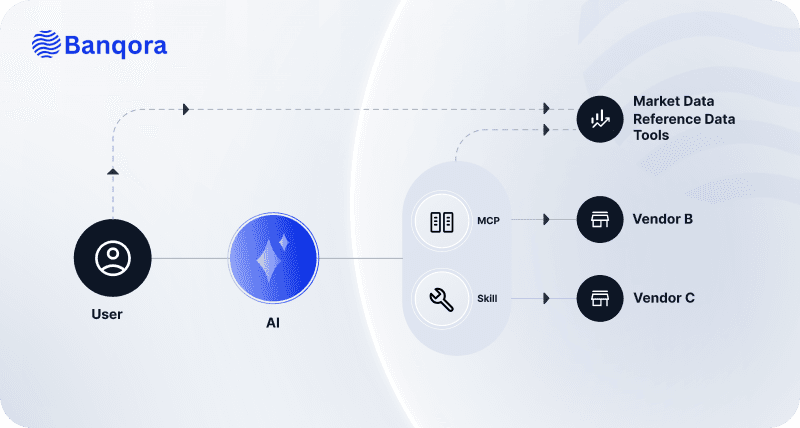
I built an MCP connector and now I can search for listed European companies and get back structured financial data, AI-generated analysis, ESG extraction, and side-by-side company comparisons.
MCP has become the standard way to plug data and tools into AI but is expanding from just being a way to shift data into something more. For instance it powers OpenAI apps, a new distribution model for vendors. This has got more traction than you might have noticed, S&P for instance already have an app live. The data and functionality that used to require a standalone application now lives inside the AI conversation itself.
Given this new distribution model and the fact that good implementation is mostly seen as a solved problem, where does that leave apps?
Software isn't dead. But the moat has shifted.
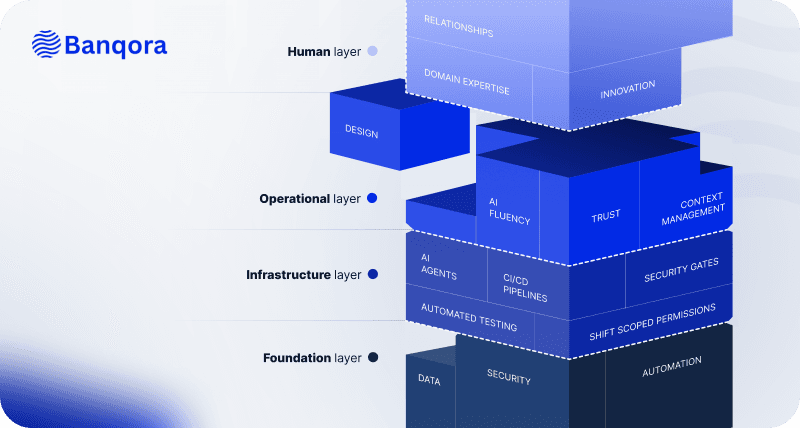
At Banqora our view is that the most valuable moat is data and distribution. If your competitive advantage is a well-designed interface, that advantage is eroding. AI can generate interfaces, what it can't generate is proprietary data, client relationships, trust, deep innovation and industry expertise.
The winners will have:
1. Data that's hard to replicate — proprietary datasets, unique aggregations, real-time feeds
2. Distribution that's already established — existing client relationships, trust, regulatory positioning
3. The flexibility to deliver that data however clients need it — as an app, an API, an AI connector, a conversation
The ESEF data I was working with is public. Anyone can access it. But the difference between raw xBRL-JSON and an AI that can parse it, extract key metrics, analyse financials, and compare companies — that's a new type of product. The intelligence layer on top, delivered through whatever interface works best.
If you're building a company today and your entire value proposition lives behind a login screen in a single-purpose application, it's worth asking: what happens when your client can get the same answer by asking their AI assistant?