24 March 2026
Agentic Infrastructure in Finance: The New Frontier for SaaS

by Nicholas Holden
There has been a lot of discussion about the 'Saaspocalypse' - the supposed death of SaaS as a business model. Having recently written about the uncertain future of the App, I want to pick up that thread: why services remain essential, and how the opportunity is shifting.
If you're buying software for a financial institution right now, you're probably stuck in the same loop as everyone else. A vendor turns up with an AI-powered product. Your team asks the obvious questions:
Which model is it using?
Where is the model located?
Who owns the outputs?
Where is our data stored?
How does this fit our model risk framework?
The vendor doesn't have great answers. The pilot stalls. Six months later you're back at square one.
At the same time, your teams want to build AI into their workflows and develop a genuine competitive advantage with it. But pilots have been hit and miss, it's not clear who should do the implementation (business aligned teams? innovation teams?). The more AI-powered products you adopt, the harder it gets to maintain a coherent AI strategy internally.
There's a way through this, and it changes what you should be looking for from vendors.
SaaS for AI
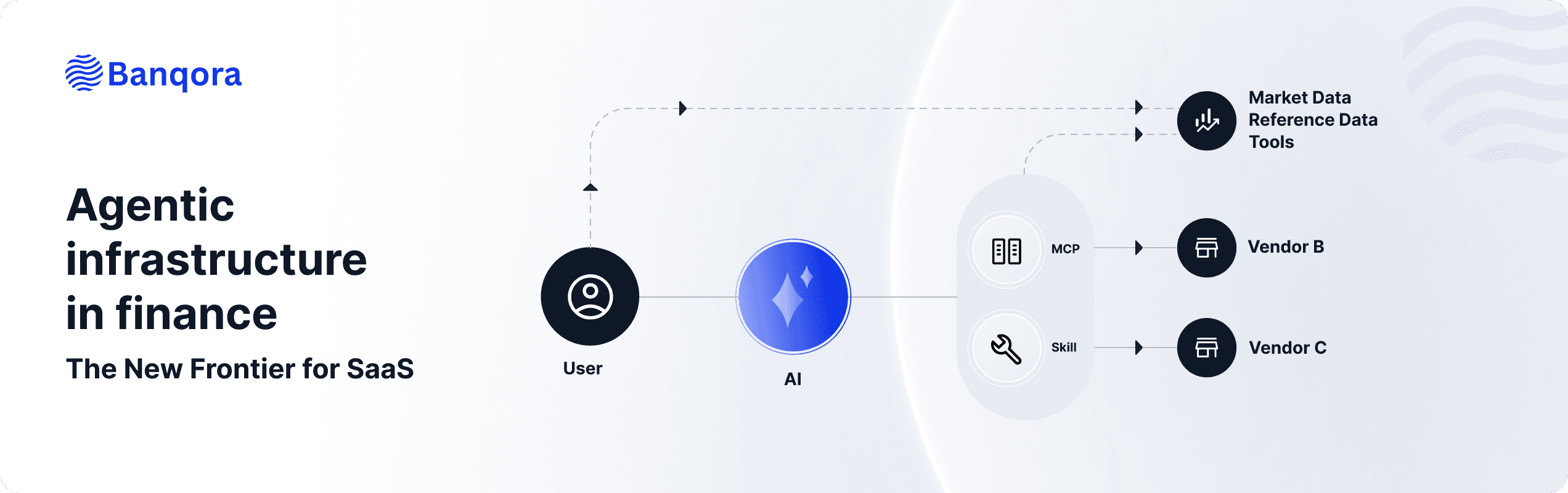
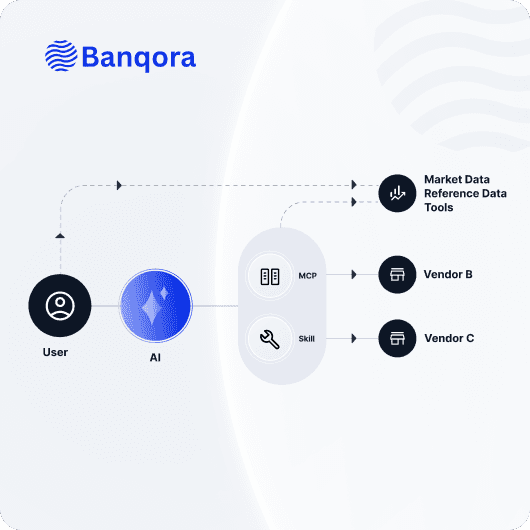
The next generation of SaaS isn't software that uses AI on your behalf. It's software that your AI can use.
Instead of a vendor embedding a model into their product and asking you to trust it, the vendor provides structured tools, data, and constraints through machine-readable interfaces. Your own AI - already approved by your model risk team, already governed under your framework, already running inside your environment - connects to those tools and uses them.
The delivery mechanism varies. It might be an MCP server, a skill, a plugin, or a well-structured API with agent-friendly schemas. The pattern is the same: the vendor exposes capabilities as tools that your AI platform can consume, rather than packaging them inside an application that only a human can operate.
This can reduce procurement and due diligence friction hugely - services are a known quantity and you've already done the AI work internally. You have your approved platform, your permissioning, your audit trail. What you need from the vendor is something your AI can work with - data, enforceable constraints, integration capabilities and tooling with the required transparency and auditability. That's a much simpler evaluation.
What This Looks Like for your Business
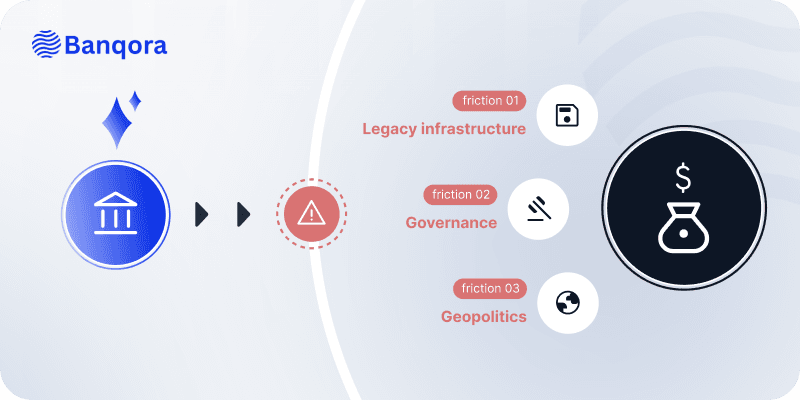
Financial services has been the hardest market for AI-powered SaaS, and for good reason. Every new vendor triggers model risk assessments, data governance reviews, and months of security due diligence. Most of that overhead exists because the vendor is asking you to trust their AI.
When a vendor offers agent-compatible tools instead of an AI product, the conversation starts from a completely different place. You're asking "can we trust your services" rather than the currently more difficult question "can we trust your AI". Your model risk team has already approved the AI platform. Your governance framework already covers it. The vendor just needs to meet your security and auditability requirements as an infrastructure provider, which is a well-understood procurement process.
In practice, this means your AI agents get structured access to holdings data, trade lifecycle events, collateral eligibility rules, compliance constraints, and financial document analysis - all through authenticated, auditable endpoints. Your agent, your governance, your controls. The vendor provides the domain-specific tooling.
What to Look For
Not every vendor will make this transition. The ones worth evaluating have three things going for them:
Data: Proprietary datasets, unique aggregations, real-time feeds that are hard to replicate. This is where vendor value concentrates when the AI layer is yours. Clean, domain-specific data exposed through a machine-readable interface is more useful to your agents than the same data was behind a dashboard your team had to log into.
Domain expertise: The cost of building generic software is collapsing. The cost of understanding how the business really works hasn't changed - and combining this with real innovation remains one of the toughest challenges.
Transparency and auditability: When your agent uses a vendor's tools, every action should be traceable. This combined with security and permissioning should not be built as an afterthought.
SaaS isn't dead, and the opportunities for innovation are greater now than in recent memory.
Banqora produces agent-ready infrastructure - data, compliance aligned, delivered as tools that your AI platform can consume. Your AI. Our infrastructure.